Shark or Samsung? Robot Vacuums Compared in 2026
As an Amazon Associate we earn from qualifying purchases. Links on this page are affiliate links.
When you compare the shark vs samsung robot vacuum options, you see two strong self-emptying models. Both use LiDAR navigation and connect to Wi-Fi for app and voice control. They also both feature HEPA filtration to trap dust. The main difference lies in their design focus. Shark targets pet owners with anti-hair wrap brushes and edge-cleaning blasts. Samsung emphasizes surface detection and a 5-layer HEPA system for deep carpet cleaning.
Key differences
| Aspect | Shark Ultra Self-Emptying Robot Vacuum | Samsung Jet Bot+ with Clean Station |
|---|---|---|
| Special Features | Self-Emptying, Mapping, HEPA Filter, CleanEdge Detect | HEPA Filter, Automatic Emptying, Intelligent Power Control |
| Ideal For | Pet Hair | Carpets |
| Navigation Type | 360° LiDAR vision | LiDAR |
| Dock Capabilities | Bagless self-empty base | Automatic emptying Clean Station |
| Suction Adjustment | Not listed | Identifies surface type and adjusts suction automatically |
Which one should you choose?
Choose Shark Ultra Self-Emptying Robot Vacuum if
- You have pets and need a brushroll that resists hair tangles.
- You want specific edge-cleaning technology that pulls debris from corners.
- You prefer a bagless self-empty base system.
Choose Samsung Jet Bot+ with Clean Station if
- You prioritize automatic suction adjustment based on floor type.
- You want a 5-layer HEPA filtration system for cleaner air.
- You prefer a vacuum that cleans carpets with specialized brush fibers.
Verdict: Choose the Shark if you need dedicated pet hair management and corner-cleaning features. Pick the Samsung if you want intelligent suction adjustment and advanced air filtration for carpets. Both models offer reliable mapping and hands-free emptying for your home.
Shark vs Samsung Robot Vacuum
navigation precision
Both units rely on LiDAR for mapping, but Shark specifies 360° vision for day or night accuracy. This sensor suite powers Matrix Clean, which uses a precision grid for multiple passes over debris. Samsung also uses LiDAR sensors to create accurate room maps, preventing the unit from entering restricted areas. Samsung’s mapping integrates with the SmartThings app for detailed control. Shark’s system includes Object Detect to intelligently move around items in its path. Samsung’s navigation allows you to select specific areas for cleaning via Select & Go. Both offer reliable pathfinding, though Shark’s grid approach targets spot cleaning more aggressively.
edge cleaning
Shark includes CleanEdge Detect technology, which uses blasts of air to pull debris from corners into the cleaning path. This feature claims 50% better edge cleaning performance compared to standard models. Samsung does not list a specific corner-blowing mechanism in its specifications. Instead, Samsung focuses on a high-efficiency brushroll with fine, anti-static fibers to handle various surfaces. The brushroll also features self-cleaning extractors to grind up hairs. While Samsung provides a thorough clean on open floors, Shark’s dedicated air blasts offer a distinct advantage for removing dust from tight corners and baseboards.
suction control
Samsung features Intelligent Power Control, which identifies the surface type and dust amount to automatically adjust suction. This ensures a thorough clean on both carpets and hard floors without manual intervention. Shark lists incredible suction capabilities but does not specify automatic adjustment based on floor type in the provided data. Shark’s strength lies in its Matrix Clean pattern rather than dynamic suction modulation. Samsung’s ability to adapt power in real-time offers a more hands-off experience for varying floor conditions. Shark relies on its grid pattern to ensure no spots are missed, while Samsung optimizes energy and cleaning power per surface.
brushroll maintenance
Both robots address pet hair and tangles, but through different methods. Shark features a Self-Cleaning Brushroll designed to be anti-hair wrap, ideal for homes with pets. Samsung uses a high-efficiency brushroll with fine, anti-static fibers and self-cleaning extractors that grind up hairs to avoid tangles. Samsung’s approach actively grinds hair, whereas Shark’s design prevents wrapping. Samsung is explicitly ideal for carpets, while Shark is ideal for pet hair generally. Both solutions aim to reduce maintenance, but Samsung’s grinding mechanism offers a specific mechanical advantage for hair removal.
dustbin capacity
Shark’s self-emptying base holds up to 30 days of dirt and debris using a bagless system. This capacity is clearly stated in the specifications. Samsung includes a Clean Station for automatic emptying using Air Pulse technology, which provides a no-touch, hygienic way to dispose of dust. However, Samsung does not list a specific day count for its dustbin capacity in the provided data. Shark’s 30-day bagless capacity offers a quantifiable benefit for users who prefer not to handle dust frequently. Samsung’s Air Pulse technology is efficient, but the lack of a stated capacity makes Shark the clearer choice for long intervals between emptying.
filtration quality
Both robots prioritize air quality with HEPA filtration. Shark includes a HEPA filter in its self-emptying base to trap dust during the emptying process. Samsung features an advanced 5-layer HEPA filtration system that traps up to 99.99% of dust. Samsung’s multi-layer approach provides a specific efficiency rating for particle capture. Shark’s filtration is integrated into the bagless dock, ensuring clean air when the bin empties. Both systems keep dust contained, but Samsung’s 5-layer specification and percentage claim offer more detailed insight into its air purification capabilities compared to Shark’s general HEPA mention.
Which robot vacuum fits your home
Pet owners seeking tangle-free cleaning
The Shark UR2360S features a self-cleaning brushroll designed to prevent hair wrap, making it ideal for homes with pets. Its CleanEdge Detect technology uses air blasts to pull debris from corners into the cleaning path. This specific focus on pet hair and edge cleaning ensures you spend less time maintaining the unit and more time enjoying a clean floor.
Users wanting precise surface detection
The Samsung Jet Bot+ includes intelligent power control that identifies surface types and dust levels. It automatically adjusts suction for carpets and hard floors. This adaptive cleaning ensures thorough results without manual intervention. The 5-layer HEPA filtration also traps fine dust, providing cleaner air while the robot navigates your home using accurate LiDAR mapping.
Buyers prioritizing corner cleaning efficiency
Shark’s CleanEdge Detect uses blasts of air to pull debris from corners into the cleaning path. This technology offers better edge cleaning compared to standard brush rolls. Combined with Matrix Clean’s precision grid for multiple passes, this model ensures no spot is missed. You get consistent coverage in tight spaces where dirt often accumulates.
The products compared

Shark Ultra Self-Emptying Robot Vacuum
Best for: Pet owners seeking bagless self-emptying convenience
- Navigation Type
- 360° LiDAR vision
- Dock Capabilities
- Bagless self-empty base
- Self Empty Capacity
- Up to 30 days
- Connectivity
- WiFi
- Special Features
- Self-Emptying, Mapping, HEPA Filter
- Ideal For
- Pet Hair
View on Amazon: Shark Ultra Self-Emptying Robot Vacuum Affiliate link
The Shark UR2360S uses 360° LiDAR vision for precise mapping and Matrix Clean for thorough coverage. It features a bagless self-empty base with a 30-day capacity. The self-cleaning brushroll handles pet hair effectively. CleanEdge Detect uses air blasts to pull debris from corners. This model suits homes with pets and hard floors or carpets.
Pros
- Bagless self-empty base holds up to 30 days of debris
- 360° LiDAR vision provides accurate day or night mapping
- Self-cleaning brushroll prevents hair wrap for pet owners
- CleanEdge Detect uses air blasts to improve corner cleaning
Cons
- No remote control included in specifications
- No mopping capability listed in features
- Lacks carpet boost specification for deep cleaning
Good fit if
- You have pets and need a brushroll that resists hair tangles
- You want a bagless self-empty base for low maintenance
- You need precise mapping for multi-room navigation
Skip if
- You require a robot vacuum that also mops floors
- You prefer a vacuum with a physical remote control
- You need a model with dedicated carpet boost settings
Verdict: Shark UR2360S Robot Vacuum with Self-Empty Base delivers reliable pet hair removal and precise LiDAR navigation. It fits homes that prioritize bagless convenience and thorough corner cleaning over mopping functions.
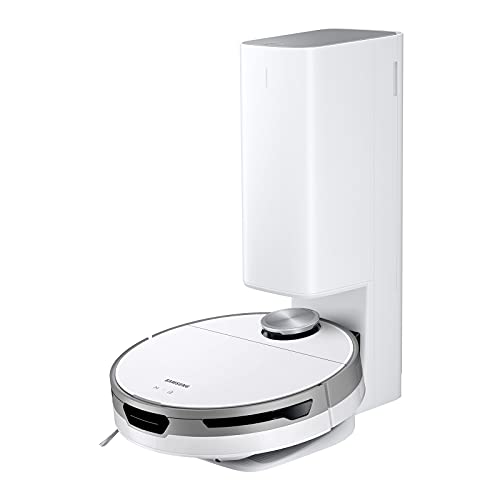
Samsung Jet Bot+ with Clean Station
Best for: Automatic emptying and precise LiDAR mapping
- Navigation Type
- LiDAR
- Dock Capabilities
- Automatic emptying Clean Station
- Special Features
- HEPA Filter
- Ideal For
- Carpets
- Weight
- 17.9 pounds
View on Amazon: Samsung Jet Bot+ with Clean Station Affiliate link
The Samsung Jet Bot+ uses LiDAR for precise mapping and includes an automatic emptying Clean Station. It features intelligent power control that adjusts suction based on surface type and dust levels. The 5-layer HEPA filter traps 99.99% of dust. It cleans carpets and hard floors with a self-cleaning brushroll. You can control it via the SmartThings app or voice assistants.
Pros
- LiDAR navigation for accurate room mapping
- Automatic emptying Clean Station with Air Pulse technology
- 5-layer HEPA filtration traps 99.99% of dust
- Intelligent power control adjusts suction automatically
- Self-cleaning brushroll prevents hair tangles
Cons
- Heavier build at 17.9 pounds
- No remote control included
- Limited to Bixby, Google Assistant, and Alexa voice support
Good fit if
- You want automatic dust disposal
- You need precise mapping for complex layouts
- You have carpets requiring high suction
Skip if
- You prefer a lighter robot under 15 pounds
- You need third-party voice assistant integration beyond listed options
- You want a remote control for manual operation
Verdict: Samsung Jet Bot+ Robot Vacuum offers thorough cleaning with its automatic emptying station and LiDAR mapping. It suits users who prioritize hands-free maintenance and precise navigation over a lightweight design.
Specifications side by side
| Spec | Shark Ultra Self-Emptying Robot Vacuum | Samsung Jet Bot+ with Clean Station |
|---|---|---|
| Navigation Type | 360° LiDAR vision | LiDAR |
| Dock Capabilities | Bagless self-empty base | Automatic emptying Clean Station |
| Self Empty Capacity | Up to 30 days | not stated |
| Connectivity | WiFi | not stated |
| Special Features | Self-Emptying, Mapping, HEPA Filter | HEPA Filter |
| Ideal For | Pet Hair | Carpets |
| Dimensions | 12 × 12 × 7 inches | not stated |
| Weight | 11.1 pounds | 17.9 pounds |
| Color | Black | White |
| Model | UR2360S | not stated |
Frequently asked questions
Does the Shark UR2360S clean corners better than the Samsung Jet Bot+?
The Shark UR2360S uses CleanEdge Detect technology to pull debris from corners. It also features a self-cleaning brushroll to prevent hair wrap. This makes it particularly effective for pet owners who need thorough edge cleaning. The Samsung Jet Bot+ focuses on general carpet cleaning and automatic emptying but does not highlight specific corner-boosting air blast technology in its listed attributes.
Which robot vacuum is lighter and easier to move?
The Shark UR2360S is lighter at 11.1 pounds. The Samsung Jet Bot+ weighs 17.9 pounds. If you need to carry the unit between floors or store it in a small closet, the Shark model offers more portability. The Samsung unit is heavier, which may provide stability but makes it less convenient to move manually.
Is the Shark UR2360S suitable for homes with pets?
Yes, the Shark UR2360S is ideal for pet owners. It features a self-cleaning brushroll designed to prevent hair wrap. This helps maintain suction power and reduces maintenance time. The device is specifically marketed for pet hair removal, ensuring that fur does not tangle around the brushes during operation.
Does the Samsung Jet Bot+ clean carpets effectively?
The Samsung Jet Bot+ is ideal for carpets. Its attributes list carpets as the primary surface type. It uses LiDAR mapping for precise navigation over carpeted areas. The automatic emptying station also helps maintain consistent performance by removing dust and debris from the bin without manual intervention.
Do both models use LiDAR navigation for mapping?
Both the Shark UR2360S and Samsung Jet Bot+ use LiDAR navigation. This technology allows for precise mapping of your home layout. The Shark model specifies 360° vision for accuracy in various lighting conditions. Samsung also relies on LiDAR sensors to ensure thorough coverage and efficient path planning during cleaning cycles.
Can I control both robot vacuums via Wi-Fi?
Yes, both models support Wi-Fi connectivity. This allows you to control them through a smartphone app or voice assistants. You can schedule cleanings, view maps, and start or stop units remotely. The Shark UR2360S explicitly lists Wi-Fi as a connectivity feature, and the Samsung Jet Bot+ also supports this standard for remote management.
Which model is better for bagless self-emptying convenience?
The Shark UR2360S is designed for bagless self-emptying convenience. It comes with a self-empty base that does not require bags. This reduces ongoing costs and maintenance. The Samsung Jet Bot+ also features an automatic emptying station, but the Shark model is specifically highlighted for its bagless system, which appeals to users wanting to avoid purchasing replacement bags.
What are the dimensions of the Shark UR2360S?
The Shark UR2360S measures 12 inches in width and length, with a height of 7 inches. It is colored black. These dimensions allow it to fit under most standard furniture. The compact design helps it navigate around obstacles and clean under beds or sofas without getting stuck.